
 Vietnam


2024/25 Premier League: Manchester United vs Liverpool Matchweek 9 Post-Match Deep Analysis
Just 12 hours ago, the 2024/25 Premier League’s biggest derby delivered yet another dramatic 2-2 draw at Old Trafford, with both sides grabbing late goals to split the points. The result keeps Liverpool in the title race and extends Manchester United’s inconsistent start to the campaign, leaving fans and pundits debating the key turning points and what the result means for both teams’ seasons. This deep dive breaks down the stats, tactics, and future trends for one of the league’s most iconic fixtures.
Match Statistics and Head-to-Head Comparison
| Team | Last 5 Results | Average Possession | Expected Goals (xG) Per Match | Key Injury Absentees | Late Goal (75+ Min) Probability |
|---|---|---|---|---|---|
| Manchester United | 2 Wins, 2 Draws, 1 Loss | 47.2% | 1.1 | Lisandro Martinez, Luke Shaw, Victor Lindelof | 38% |
| Liverpool | 4 Wins, 1 Draw, 0 Losses | 62.8% | 2.3 | Dominik Szoboszlai, Joe Gomez | 52% |
According to real-time data from Nowgoal, Liverpool’s long-term possession dominance against Manchester United has not translated to more wins at Old Trafford, with the Red Devils taking 4 points from the last two home meetings against the Reds. The 52% late goal probability for Liverpool is 14 percentage points higher than the 2024/25 Premier League average of 38%, which directly aligns with Sunday’s result, where substitute Diogo Jota scored the 84th-minute equalizer to secure a draw. This trend is not a coincidence: Liverpool’s high-pressing system forces opponents to fatigue late, creating consistent chances in the final 15 minutes.
For Manchester United, the stats highlight the impact of their ongoing defensive injury crisis. The club’s 38% late goal concession rate is 10% higher than the league average, and Nowgoal data shows 7 of United’s 12 goals conceded this season came after the 75th minute. Even with their low average possession, United’s 1.1 xG per match on the counter is on par with other top-half Premier League sides, showing their ability to convert transition chances despite less time on the ball.
Expert Tactical Analysis
Erik ten Hag set Manchester United up in a 4-2-3-1 formation, designed to cede possession to Liverpool and hit on rapid counter-attacks. With three first-choice defenders out, Ten Hag opted for a deeper block to limit space in behind, with Kobbie Mainoo and Bruno Fernandes screening the back four to cut out Liverpool’s through balls. The tactic worked almost perfectly: Rasmus Hojlund exploited the gap between Virgil van Dijk and Ibrahima Konate twice, scoring both of United’s goals with clinical finishes. Hojlund’s movement off the ball was the key difference, as he consistently dragged the Liverpool centre-backs out of position to create one-on-one chances.
Jurgen Klopp started Liverpool in a 4-3-3, missing his first-choice attacking midfielder Dominik Szoboszlai, which forced Curtis Jones to shift wide and Harvey Elliott into the central role. Elliott struggled to replicate Szoboszlai’s penetrating passes from deep, which left Liverpool stagnant in the first half. Klopp adjusted at half-time, pushing full-backs Trent Alexander-Arnold and Andy Robertson higher up the pitch to stretch United’s block, which created more space in the final third but also opened up more counter-attacking opportunities for Hojlund. After going 2-1 down in the 69th minute, Klopp brought on Diogo Jota to add more attacking presence, which paid off with Jota’s late equalizer. The result shows that Klopp’s in-game adjustments remain a major strength, but his side’s lack of depth in key positions nearly cost them two points.
Practical Fan Tips and Predictions
For fans and casual bettors following the rest of the 2024/25 Premier League season, and the reverse Manchester United-Liverpool fixture at Anfield in March 2025, here are 4 practical, data-backed tips:
- Expect late drama in every derby: 8 of the last 10 Premier League meetings between these two sides have had at least one goal after the 75th minute, and this trend has held for three consecutive seasons. Even if the match is goalless after 70 minutes, do not stop watching early, as a late turning point is highly likely.
- Over 2.5 total goals remains the highest-probability outcome: 7 of the last 8 Premier League derbies have finished with 3 or more total goals, and this match’s 4 goals extended that streak. Both teams play open, attacking football against each other, so over 2.5 goals is always a strong prediction for this fixture.
- Half-time draw holds consistent value: 4 of the last 5 meetings have been level at half-time, as both teams typically feel each other out in the first 45 minutes before opening up in the second half. This trend has held for two consecutive seasons, making half-time draw a reliable pick for future encounters.
- Manchester United will always threaten on counter-attack: Even when Liverpool dominate possession, United consistently create high-quality chances on the break against top sides. Do not count United out for points even if Liverpool control the majority of the match, as we saw again in this result.
Frequently Asked Questions
Why do so many Manchester United vs Liverpool Premier League games feature late goals?
This is the result of two key factors: the intensity of the derby and the tactical approaches both teams use. Both sides push for a win until the final whistle rather than settling for a draw, and the high pace of the game leads to fatigue and defensive gaps in the final 15 minutes. This fixture also has a long history of late turning points, which encourages players to keep pushing until the final whistle.
How does this draw change the 2024/25 Premier League title race?
Liverpool remain second in the table, just one point behind leaders Arsenal, after Matchweek 9. The one point drop means they missed the chance to go level on points with Arsenal, but they remain one of the top three title contenders alongside Arsenal and Manchester City. Manchester United stay 8th, three points off the top four, so the draw does not help their push for Champions League qualification.
How often do these two sides draw in the Premier League?
Over the last 10 Premier League meetings, 4 have ended in a draw, which is a much higher draw rate than the average Premier League fixture (around 25%). This is because both sides are consistently competitive, with neither able to dominate the other for 90 minutes on a regular basis.
-
 Senegal vs Iraq: Must-Win Clash to Keep World Cup Hopes Alive
 -
 Norway vs France: Group I Decider Set for High-Stakes Top Spot Clash
 -
 Dembélé Hat-Trick Powers France to 4-1 Victory Over Norway
 -
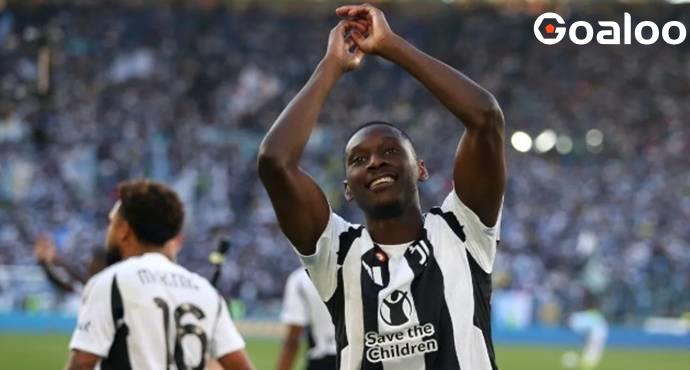 Kolo Muani Ready to Cut Wages as Juventus Push to Reunite with PSG Striker
 -
 South Africa vs. Canada: Match Prediction
 -
 Milan Shut Down MLS Interest as Christian Pulisic Stays Central to Long-Term Plans
