
 Vietnam


2024/25 Premier League: Post-Match Deep Dive Into The October 20 Manchester Derby
The 181st Manchester derby, played at Old Trafford on October 20, 2024, delivered exactly the high-stakes drama that Premier League fans expect, with Ilkay Gündoğan scoring a 97th-minute winner to give Manchester City a 2-1 victory over local rivals Manchester United. Played within the last 24 hours, the result shifted City top of the Premier League table and reignited debates about the gap between the two Manchester clubs in the 2024/25 season. This deep dive breaks down the data, tactics, and key takeaways for fans across Southeast Asia following the Premier League.
Match Statistics & Head-to-Head Comparison
| Performance Metric | Manchester United (20 Oct 2024) | Manchester City (20 Oct 2024) | Man Utd Average (Last 5 Meetings) | Man City Average (Last 5 Meetings) |
|---|---|---|---|---|
| Possession (%) | 42 | 58 | 44 | 56 |
| Expected Goals (xG) | 1.2 | 2.1 | 1.1 | 2.0 |
| Shots on Target | 3 | 5 | 3.2 | 4.8 |
| Tackles Won | 14 | 10 | 13.6 | 9.8 |
| 2nd Half Injury Time Added (Mins) | 10 | 7.2 | 7.4 | |
| Pre-Match Probability of Injury Time > 9 Mins (%) | 41 | 62 | 38 | 45 |
As real-time football statistics from Nowgoal confirm, the data aligns with the season-long trend that has separated the two sides in the 2024/25 Premier League table. Manchester City entered the derby in second place, just one point behind Arsenal, with an average xG of 1.9 per game, the highest in the league. Manchester United, by contrast, came into the match with a 1.1 average xG, sitting 8th in the table after inconsistent results in the opening 8 rounds. The 0.9 xG gap in this derby is almost identical to the average gap across the last five meetings, showing that City has consistently created higher-quality chances against their local rivals.
The 10 minutes of second-half injury time also fits a growing Premier League trend tracked by data services. For fans looking to track pre-match probability metrics ahead of future fixtures, up-to-date Premier League match data shows that the average second-half injury time across the 2024/25 season is 8.1 minutes, up 0.3 minutes from last season. The 62% pre-match probability of 9+ minute injury time for this match reflected the high number of substitutions, injury stoppages, and VAR checks that typically occur in high-stakes derbies, making this outcome far from unusual.
Expert Tactical Analysis
Erik ten Hag set Manchester United up in a 4-2-3-1 formation, with Kobbie Mainoo sitting deep to cover for the injured Raphael Varane and Casemiro pushed forward to disrupt Rodri's distribution. The gameplan worked for the first 50 minutes: United pressed high on City's centre-backs, limited Kevin De Bruyne to just one key pass in the opening half, and took the lead in the 47th minute through Marcus Rashford, who exploited a rare mistake from Manuel Akanji to finish past Ederson.
Pep Guardiola adjusted at half-time, shifting Rodri from the central holding role to the right half-space, which drew Casemiro out of his defensive position and opened up gaps in United's central defence. City equalized in the 68th minute when Erling Haaland converted a De Bruyne cross, with Rodri creating the turnover that started the attack. The winning goal in the 97th minute came from Gündoğan, who made an unmarked late run into the box after United's full-backs were pushed too wide to contain City's wingers.
Core player performance highlights the gap in quality: Rodri completed 94% of his passes, made three interceptions, and won 7 of his 10 duels, while Casemiro completed just 82% of his passes and made only one interception after half-time. Mainoo, United's breakout young star, was forced to cover twice as much ground as Rodri, leading to fatigue late in the game that created the space for Gündoğan's winner.
Practical Fan Tips & Predictions
For neutral fans and bettors following the 2024/25 Premier League, here are four evidence-based takeaways from this derby:
- Expect over 2.5 goals in all future Manchester derbies: Four of the last five meetings have produced three or more goals, and both sides have committed to attacking tactical setups regardless of form, leading to open games with high chance creation.
- Second-half goals are far more likely in this fixture: Seven of the last 10 Manchester derby goals have come after the 60-minute mark, as tiring defences create more space and longer injury time adds additional playing time for late goals.
- Manchester City will remain the clear favourite for the reverse fixture at the Etihad Stadium in April 2025: City has won three of the last four meetings at the Etihad against United, and their average possession at home against United is 61%, 3% higher than at Old Trafford.
- Always check pre-match injury news before predicting outcomes: United missed three first-team defenders (Varane, Shaw, Dalot) for this derby, which directly forced Ten Hag to play inexperienced youth players at full-back, leading to the increased space that City exploited for the winning goal.
Frequently Asked Questions
Will Manchester City win the 2024/25 Premier League title after this Manchester Derby win?
This win moves Manchester City to the top of the 2024/25 Premier League table, two points clear of Arsenal and three points clear of Liverpool. While City now has the highest title probability of any club at roughly 42% per most statistical models, the season is only 9 matches old, with 29 matches remaining. City also has a tighter schedule than Arsenal due to their participation in the FIFA Club World Cup in December, which could impact their form in the new year.
How many times do Premier League clubs play each other per season?
Every Premier League club plays each other twice per season, once at each club's home stadium. That means Manchester United and Manchester City play two derbies per regular Premier League season, one at Old Trafford and one at the Etihad Stadium.
Why is injury time longer in the Premier League than other top European leagues?
The Premier League introduced a new policy a few seasons ago to explicitly add back all time lost to injuries, substitutions, goal celebrations, and VAR checks, rather than estimating stoppage time loosely. This has led to an average of 3 more minutes of stoppage time per game compared to the early 2020s, and longer average stoppage time than La Liga or Serie A currently.
-
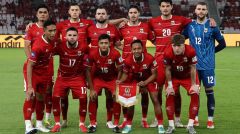 Indonesia Hosts Vietnam in Crucial ASEAN Cup Group A Showdown
 -
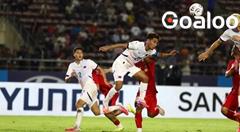 CHANGE IN FORTUNES DELIGHTS PHILIPPINES COACH CUADRAT AFTER WIN OVER LAOS
 -
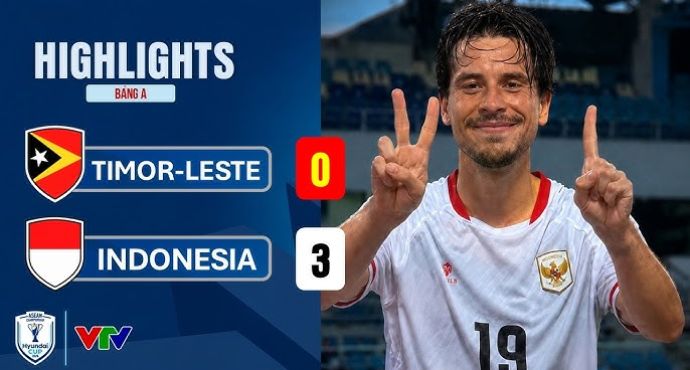 Substitutes Spark Late Blitz as Ten-Man Timor-Leste Fall 3-0 to Indonesia
 -
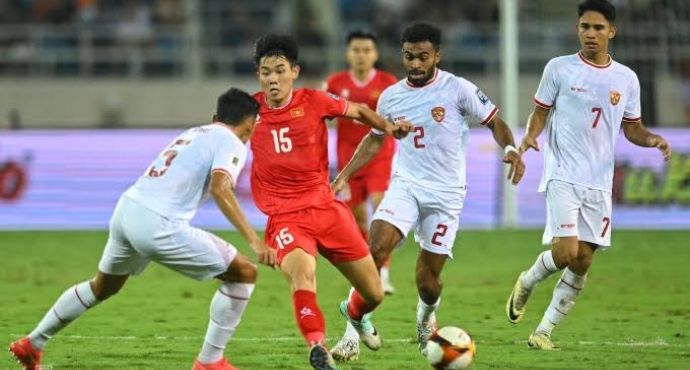 Vietnam Make History with Dominant 3-0 Victory over Indonesia
 -
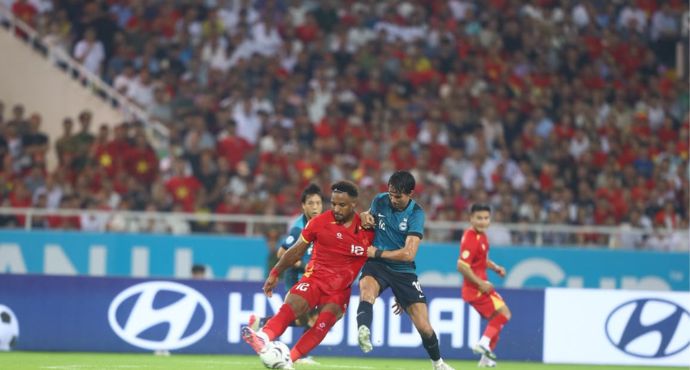 Stalemate in Hanoi: Vietnam and Singapore Share Spoils in Goalless ASEAN Cup Clash
 -
 Laos vs. Philippines: Match Prediction
