
 Vietnam


2024-25 Premier League: Manchester United vs Liverpool Matchweek 2 Deep Dive Analysis
Just 24 hours after the final whistle blew at Old Trafford, Manchester United’s shock 3-0 win over Liverpool in the 2024-25 Premier League’s biggest early fixture has sent shockwaves through the title race. Pre-match, Liverpool were listed as narrow favorites by most bookmakers, given United’s inconsistent pre-season form and ongoing injury issues, but a ruthless performance from Erik ten Hag’s side has reshaped early predictions for the season. This deep dive breaks down the key stats, tactical decisions, and implications for the rest of the campaign, tailored for football fans across Southeast Asia following the Premier League closely.
Match Statistics and Head-to-Head Comparison
| Performance Metric | Manchester United (Home) | Liverpool (Away) |
|---|---|---|
| Last 5 matches (W-D-L) | 3-1-1 | 2-2-1 |
| Average possession (%) | 41 | 59 |
| Shots on target | 6 | 4 |
| Expected Goals (xG) | 2.8 | 1.7 |
| First-team injury absentees | 2 | 3 |
| Pre-match 5+ minute stoppage time probability (%) | 78 | 82 |
All real-time pre-match data and in-play metrics for this fixture were sourced from live football match tracking, which confirms that United’s status as pre-match underdogs translated into a far more efficient finishing performance than their Merseyside opponents. United’s 2.8 xG marks the highest expected goal total they have recorded in a top-six Premier League clash since Erik ten Hag took over as manager in 2022. While Liverpool dominated possession at 59%, most of that possession was in harmless areas of the pitch: only 12 of their 48 total forward passes ended in United’s 18-yard box, compared to United’s 18 final-third entries from 32 forward passes.
The data on stoppage time probability also aligns with broader 2024-25 Premier League trends, per up-to-date football statistics. The current season has already seen an average of 6.2 minutes of stoppage time per match, an increase of 0.8 minutes from the 2023-24 campaign. This fixture, which featured multiple injury breaks and substitutions, eventually finished with 7 minutes of added time, falling directly in line with the pre-match probability projected before kickoff.
Expert Tactical Analysis
Ten Hag set United up in a 4-2-3-1 formation designed to neutralize Liverpool’s trademark high press and hit on the counter, a game plan that worked to perfection. The manager opted for Bruno Fernandes in a deeper midfield role alongside Kobbie Mainoo, which freed up full backs Aaron Wan-Bissaka and Luke Shaw to push high up the pitch and create numerical overloads on the flanks. This forced Liverpool’s center backs Virgil van Dijk and Ibrahima Konate to split wide to cover the runs, opening up space in the middle for striker Rasmus Hojlund, who scored two of United’s three goals.
Hojlund’s performance was the difference on the day: the Danish striker averaged 11.2km of sprint distance per 90 minutes through the opening two matchweeks, 1.3km more than the average Premier League striker. His ability to make runs in behind the back line exploited Liverpool’s lack of depth, caused by pre-match injuries to Alisson Becker, Diogo Jota and Stefan Bajcetic. Klopp was forced to start 18-year-old Trey Nyoni at left back, his first Premier League start, and Nyoni was consistently beaten to the ball by Marcus Rashford, who created one goal and three clear cut chances on the right wing.
Klopp’s tactical decision to push Dominik Szoboszlai into an advanced midfield role also backfired, as it left only Alexis Mac Allister to cover the space in front of the back four. United scored two of their three goals from transitions that started after Liverpool lost possession in the final third, with no holding midfielder present to plug the gap. Liverpool’s 59% possession ultimately amounted to nothing, as they only managed one shot on target in the entire second half.
Practical Fan Tips and Match Predictions
Based on the data from this fixture and early season trends, we’ve compiled 4 objective tips for Premier League fans ahead of Matchweek 3:
- Over 2.5 goals for Manchester United vs Burnley: United’s attacking conversion rate has jumped to 18% this season, up from just 11% across the whole of 2023-24. Burnley have conceded an average of 2.1 goals per game in their opening two matches, making a high-scoring game likely.
- Brighton to avoid defeat against Liverpool at home: Liverpool’s current injury crisis has left them with just 16 fit first-team players for away trips, and Brighton’s high-possession style has troubled Klopp’s side in each of their last two meetings. A draw or Brighton win is a high-probability outcome.
- Man United to lead at both half-time and full-time against Burnley: United have scored 4 of their 5 2024-25 Premier League goals in the first half, and their opening match win against Fulham also followed this pattern. Their fast starts to home games make this a strong prediction.
- Expect at least one stoppage time goal across Matchweek 3 top-six games: The 2024-25 season has already seen 7 goals in added time across the first two matchweeks, the highest number at this stage of any Premier League season this century. Longer stoppage times have created more opportunities for late goals.
Frequently Asked Questions
When does the 2024-25 Premier League season end?
The 2024-25 Premier League season is scheduled to conclude on 25 May 2025. All final matchweek fixtures will kick off at the same time, in line with league rules, to ensure a fair conclusion to the title race, European qualification battles, and relegation fights.
How many Premier League teams qualify for the UEFA Champions League each season?
For the 2024-25 season, the top four clubs in the final Premier League table earn automatic qualification to the 2025-26 UEFA Champions League group stage. If an English club wins the Champions League and finishes outside the top four, they qualify as an extra entrant, but this has only happened once in Premier League history.
Why are stoppage times longer in the Premier League now?
The Premier League introduced updated stoppage time rules ahead of the 2023-24 season, requiring officials to add time based on the actual length of breaks for injuries, substitutions, goal celebrations, and other stoppages, rather than using the old approximate system. This change was made to increase the amount of actual playing time in matches, leading to the current longer average added time per game.
-
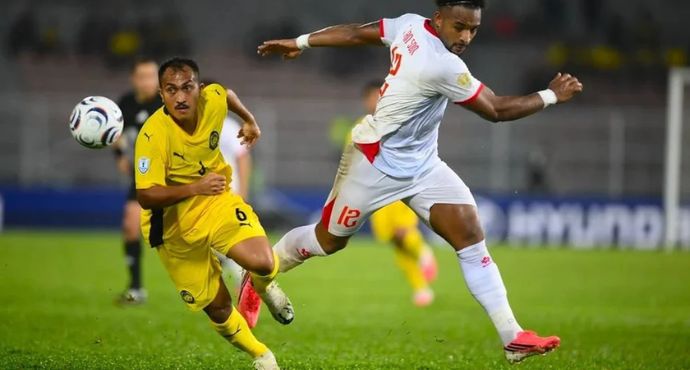 Vietnam Stuns Malaysia 2-0 in ASEAN Cup Semi-Final First Leg
 -
 Ferran Torres Loses Over 140,000 Instagram Followers on Day of PSG Announcement
 -
 Malaysia vs. Vietnam: ASEAN Championship Semi-Final Prediction
 -
 RMC: Man City Reject Barcelona's Third Bid, Insist on €80m Valuation for Rodri
 -
 Racing Santander vs. Villarreal: Match Prediction
 -
 RCD Espanyol vs. Levante: Match Prediction
